
What are the benefits of glazing ceramic products?

-
Glaze
In ancient times, the appearance of wood-fired ceramics was mostly rough, with irregular colors and personalized styles. Modern ceramics are made with unified craftsmanship. Whether it is ceramic tableware or ceramic tea sets, the bright and beautiful appearance is the style of ceramics. In order to make the appearance of porcelain more beautiful, a layer of beautiful clothes “glaze” is put on the finished ceramics.
Glaze is a thin layer of colorless or colored glass covering the surface of ceramic products. It is made of mineral raw materials (feldspar, quartz, talc, kaolin, etc.) and a certain proportion of raw materials (some of the raw materials can be made into frits first). The glaze slurry is made by grinding, applied to the surface of the green body, and calcined at a certain temperature. It can increase the mechanical strength, thermal stability, and dielectric strength of the product, while beautifying the vessel, facilitating cleaning, and not being corroded by dust and dirt.
-
Types of glazes
- According to the body, there are porcelain glaze, pottery glaze and flint glaze;
- According to the firing temperature, it can be divided into high-temperature glaze and low-temperature glaze;
- According to the appearance characteristics, it can be divided into transparent glaze, opal glaze, colored glaze, bright glaze, matte glaze, cracked glaze, crystal glaze, etc.;
- According to the composition of the glaze, it can be divided into lime glaze, feldspar glaze, lead glaze, lead-free glaze, boron glaze, lead-boron glaze, etc.
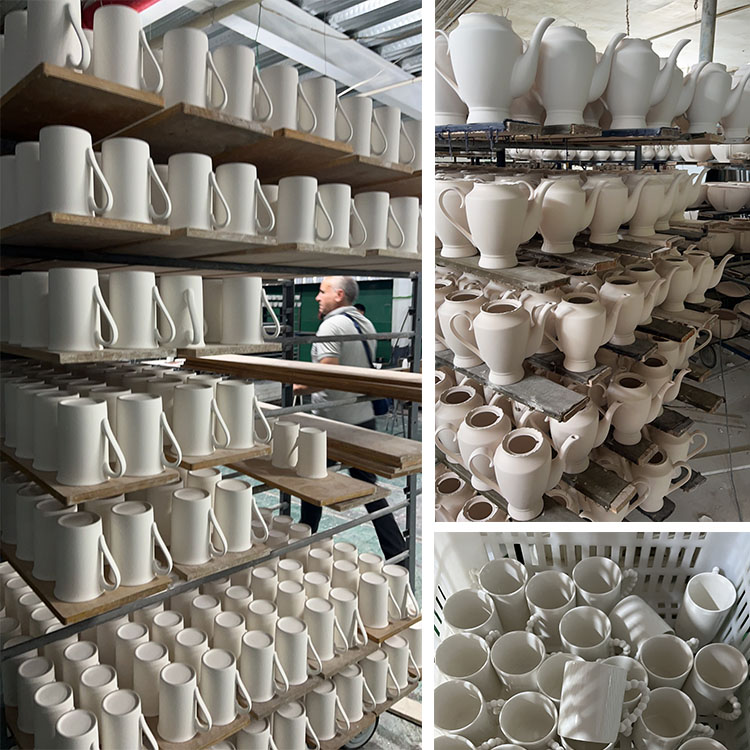
Photo by YDY Porcelain Factory
Glazing means that when firing pottery and porcelain, you have to fire the rough blank first, then take it out and glaze it, and then fire it again.The painted porcelain blank is rough and dull. After glazing, it is completely different, smooth, and bright: different glazing processes have completely different effects. Commonly used glazing methods include dipping, glazing, and glazing. Glazing, spraying glaze, brushing glaze, etc.
-
The role of glazing
1. Aesthetics
The bodies of ceramic gifts are all plain pottery, which is the so-called earth color. Through customized various decals and other processes, the appearance becomes rich and diverse, adding a warm atmosphere to the family gathering table.
2. Value enhancement
Ordinary unglazed ceramic gifts are basically bodies made of earth. They are not as practical as porcelain products in terms of practicality and appearance. In order to make ceramics colorful, they need to be decorated with glazes of different colors to make porcelain more textured and suitable as one of the best choices for gifts. For example, customizing exclusive mugs and tableware with exclusive patterns on Christmas, Thanksgiving, and other holidays.
3. Practicality
After glazing ceramic tableware, mugs, tea sets, and other porcelains, they can make ceramic products more durable, which not only improves their beauty but also increases their practicality.

